
Rethinking the Life Cycle of Our Clothes This Circular Economy Month
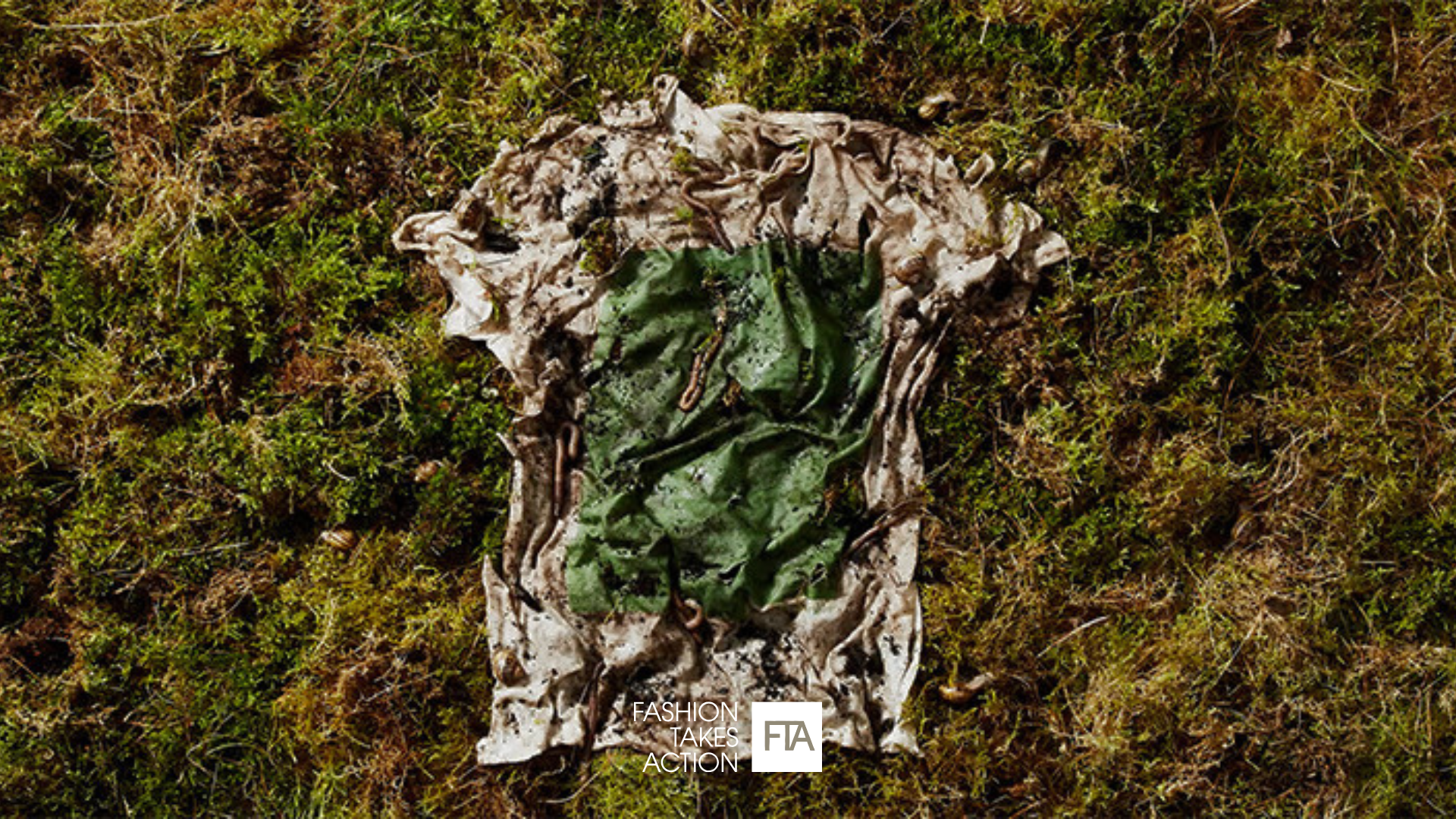
Every piece of clothing in your closet has a story. It began as a fibre, was transformed into fabric, designed and stitched somewhere, travelled through supply chains and eventually became part of your wardrobe. One day it will leave it again. Then what? Can it be worn longer, repaired, resold or passed on? And when it can no longer be used as clothing, is there a system in place to recover its value?
The answers depend on much more than individual choices.
They depend on how products are designed, what infrastructure exists to collect and process textiles, whether viable markets exist for recovered materials, and whether policies and business models support keeping products and resources in use.
Those choices are made by many different players, and they rarely share the same map. Creating a circular textiles economy isn’t something any one organization can accomplish alone. It requires changing how an entire system works.
That’s the challenge the Canadian Circular Textiles Consortium (CCTC) was established to address.
What is the CCTC?
Launched by Fashion Takes Action (FTA) in 2023, the CCTC is a national multi-stakeholder initiative bringing together brands and retailers, policymakers, municipalities, charities, NGOs, academics, manufacturers and innovators. Today, 140+ stakeholders from across the textiles value chain participate in this work.
Across Canada, organizations are already advancing important work in circular design, textile recovery, reuse, repair, recycling and policy. But these efforts often operate in silos, even when they’re addressing interconnected challenges. The CCTC helps bridge those divides.
By creating a pre-competitive environment for collaboration, the CCTC enables organizations with different perspectives, expertise and priorities to co-develop solutions to shared problems that extend beyond any single company’s operations.
But collaboration is only the starting point.
The CCTC’s role is to help identify systemic barriers, build shared understanding, generate evidence and support coordinated action toward a circular textiles economy. Our shared vision is an integrated, circular textiles system that eliminates global textile waste while moving Canada toward a regenerative economy.
Building on Nearly a Decade of Circular Textiles Work
The CCTC builds on nearly a decade of FTA’s work in circular textiles, combining research, practical testing and collaboration. We first introduced circularity as a major discussion topic at our World Ethical Apparel Roundtable (WEAR) Conference in 2016. Key milestones since then include:
Through these initiatives, FTA built evidence, tested approaches and brought stakeholders together around shared challenges. The CCTC builds on that foundation, creating an ongoing platform to connect this work and advance circularity across Canada’s textiles system
A Shared Vision for Systems Change
When the CCTC began, stakeholders were invited to imagine what a truly circular textiles system in Canada would look like.
Their input informed the Futures Framework, identifying 10 interconnected action areas: circular design, circular business models, infrastructure pathways, policy drivers, financial incentives, citizen awareness, industry education, green procurement, traceability and impact measurement, and Made in Canada solutions.
These areas recognize that circularity extends far beyond recycling.
Designing longer-lasting products won’t achieve its full potential without repair and reuse systems. Textile recycling cannot scale without suitable collection, sorting, preprocessing infrastructure and demand for recovered materials. And businesses cannot make long-term investments without the right economic conditions and policy certainty.
Progress in one area depends on progress in others. The Futures Framework helps us see these connections, while our stakeholder engagement, research and collaborative projects identify where action is most needed
Turning Shared Challenges into Action
FTA leads projects across the 10 action areas with support from national and international CCTC partners. Advancing these interconnected areas together is essential to achieving lasting systems change.
Here’s a look at what’s underway.
Designing waste out
The Circular Design project gives Canadian brands practical tools to design waste out from the start, including a Toolkit built on 11 circular design principles, a national Circular Design Guideline that may lead to the development of a national standard, and workshops where brands test the ideas on real products. The goal is to help make circular design a more consistent practice across the Canadian industry.
Following the trail of discarded clothes
Working with researchers at the University of Alberta, this project maps Canada’s secondhand and charitable clothing network and tracks where non-rewearable textiles end up, helping identify gaps in the system so policy and investment decisions can be informed by evidence.
As an evolution to this project, an interactive Circular Textiles Ecosystem Map is underway to make it easier for citizens to find repair, reuse, collection, sorting, upcycling and recycling services across the country. Alongside it, the CCTC is laying the groundwork for a national Material Flow Analysis, a way of measuring how textiles move through Canada from production to end of life.
Helping Canadians love their clothes longer
Love Your Clothes, a bilingual website created by the CCTC, helps Canadians put the 7Rs of circular fashion into practice with an abundance of resources sorted by: Reduce, Reuse, Repair, Repurpose, Resale, Rent and Recycle. It will grow through podcasts, partner promotional kits and post-secondary student Campus Clubs.
Rescuing clothes before they’re discarded
Many donated garments are rejected at sorting for minor issues, like a small stain or a missing button. A Value Recovery Pilot is testing low-effort ways to give those items a second chance within existing sorting and grading systems. This includes selling them as is - with care or upcycling tips - or with ultra-light fixes like zipper clips and fabric stickers. Starting at a small number of test sites, the pilot will measure what works, for which garments, and at what cost, in order to build a business case and toolkit that other secondhand operators can use.
Turning scraps into something new
One industry’s waste is another’s raw material. A 2025 pilot turned industrial and commercial textile waste into char for use as a soil amendment, with positive results. The project explored opportunities to recover value from materials that might otherwise go to waste.
Growing a Canadian fibre loop
Canada grows wool, flax and hemp, but the supply chain linking farms to fashion has gaps. This project is mapping what it would take to build viable, circular systems for these fibres, including the connections and infrastructure needed to support Canadian production.
Shaping policy
With dedicated textile circularity policies still largely undeveloped in Canada, there is an opportunity for industry and other stakeholders to help shape them from the ground up. The CCTC's Policy Committee is developing a National Policy Roadmap that identifies priorities such as extended producer responsibility (EPR), incentives for reuse and repair, green procurement and investment in circular textile infrastructure. By bringing different perspectives to the table early, the goal is to help inform practical, effective policies that support a circular textile economy.
Testing bold ideas fast
The CCTC’s Innovation Workstream brings different stakeholders together to investigate shared challenges, test new approaches and identify practical pathways toward implementation. The goal is to help promising circular solutions overcome barriers that no single organization can address alone.
The difference it makes
For the organizations at the table, the CCTC offers a rare chance to work alongside others across the textile value chain, learn from shared resources, bring different perspectives to common challenges, and help shape the tools, policies and collaborative solutions needed to advance circularity.
For the public, the goal is a system where buying better, wearing longer and passing clothes on responsibly are easy choices, backed by the infrastructure, industry practices and policies to make them stick.
Join the movement
Every system starts with people who decide to change it. If you’re a citizen, visit Love Your Clothes and start with one of the 7Rs this week. If you’re a brand, innovator, municipality, researcher or manufacturer, the CCTC is a place to share what you know and shape what comes next.
To learn about how to get involved, email circularity@fashiontakesaction.com.
